


Your company page may not have a lead-generation problem.
It may have a trust problem.
Your company publishes regularly.
Your team shares industry insights.
Your executives post thought leadership.
Your social media calendar is full.
You may even have AI tools generating personalized content, prospect lists, outreach messages, and follow-ups.
Yet the leads aren't coming.
So the obvious question becomes:
"Why is our LinkedIn company page not generating leads?"
The answer isn't always more content.
And it certainly isn't always more automation.
For many B2B companies : particularly in healthcare, financial services, fintech, and other high-trust industries : the real problem is that the company is trying to convert people before giving them enough reasons to trust it.
The modern B2B buyer doesn't want to feel like a target.
They want to feel understood.
And that distinction matters.
The short answer: Why do company pages fail to generate leads?
Common causes include:
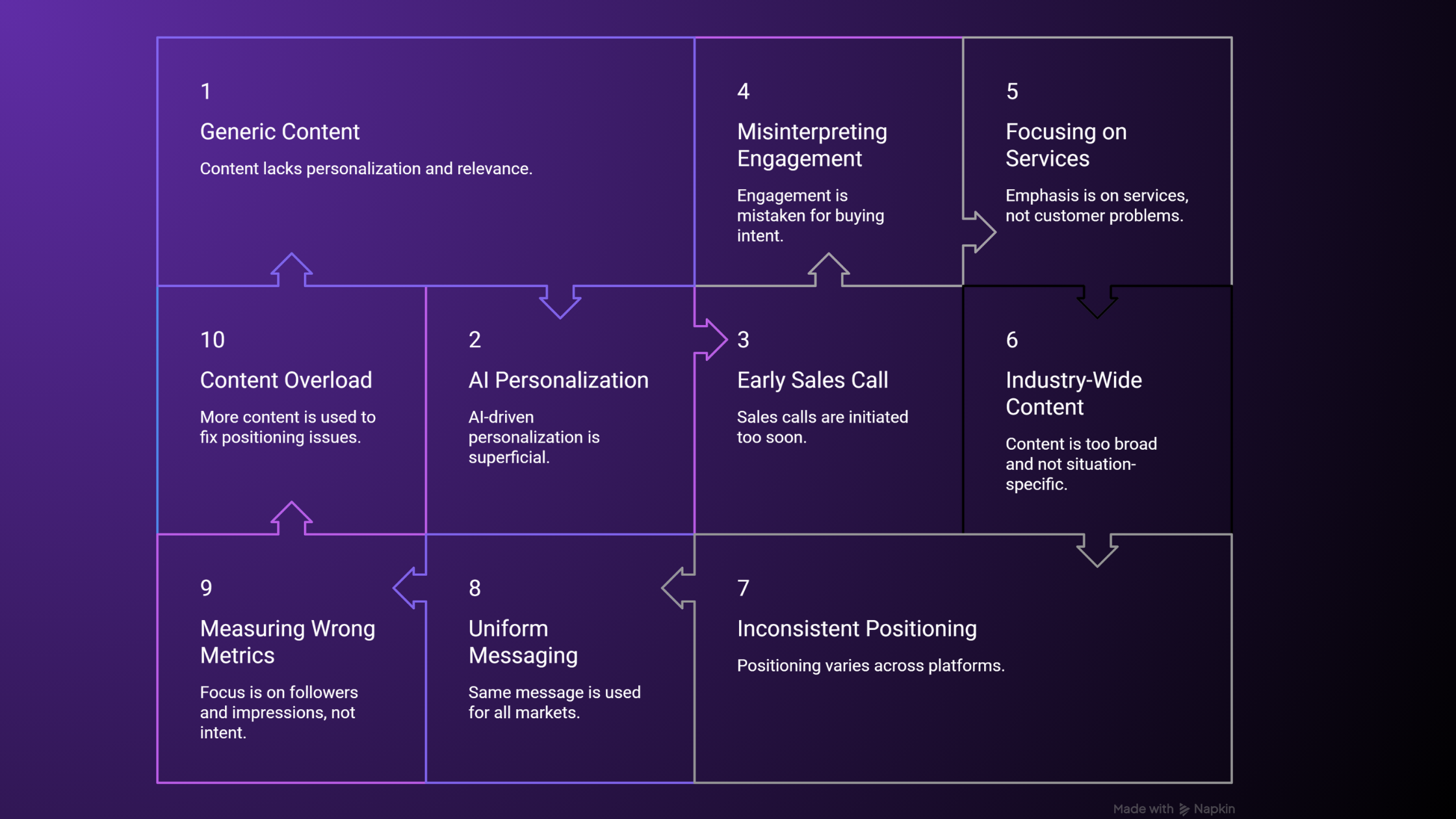
For healthcare and finance, there is an additional issue:
Trust takes longer to earn because the perceived risk of making the wrong decision is higher.
1. Your company page talks about what you do instead of what your buyer is struggling with
This is probably the most common problem.
Look at the typical B2B company page:
"We are a leading healthcare marketing agency helping organizations accelerate growth through innovative digital solutions."
It sounds professional.
It is also almost impossible to remember.
A healthcare executive doesn't wake up thinking:
"I need an innovative digital solution."
They might be thinking:
"Why are our competitors getting more visibility with the same services?"
Or:
"Why are we generating website traffic but not qualified inquiries?"
Or:
"Why does our brand still sound like every other healthcare company?"
The same applies to financial services.
A fintech executive may not be thinking:
"We need better social media marketing."
They may be thinking:
"Why isn't our content helping enterprise buyers understand why we're different?"
The solution: Start with the business problem.

Instead of:
What we offer → Why we're great → Contact us
Build:
Problem → Consequence → Insight → Possible solution → Evidence → Conversation
Healthcare example
Weak:
We help healthcare organizations improve their digital marketing and generate more leads.
Stronger:
Your healthcare practice may not have a visibility problem.
It may have a credibility problem.
If every competitor describes itself as "patient-centered," "innovative," and "trusted," buyers have no reason to remember one brand over another.
That creates a reason to keep reading.
Finance example
Instead of:
We help financial institutions transform their marketing.
Try:
A financial services buyer rarely chooses a provider because it published more content.
They choose the provider that makes a complicated decision feel less risky.
Now you are addressing the buying psychology.
Reusable template
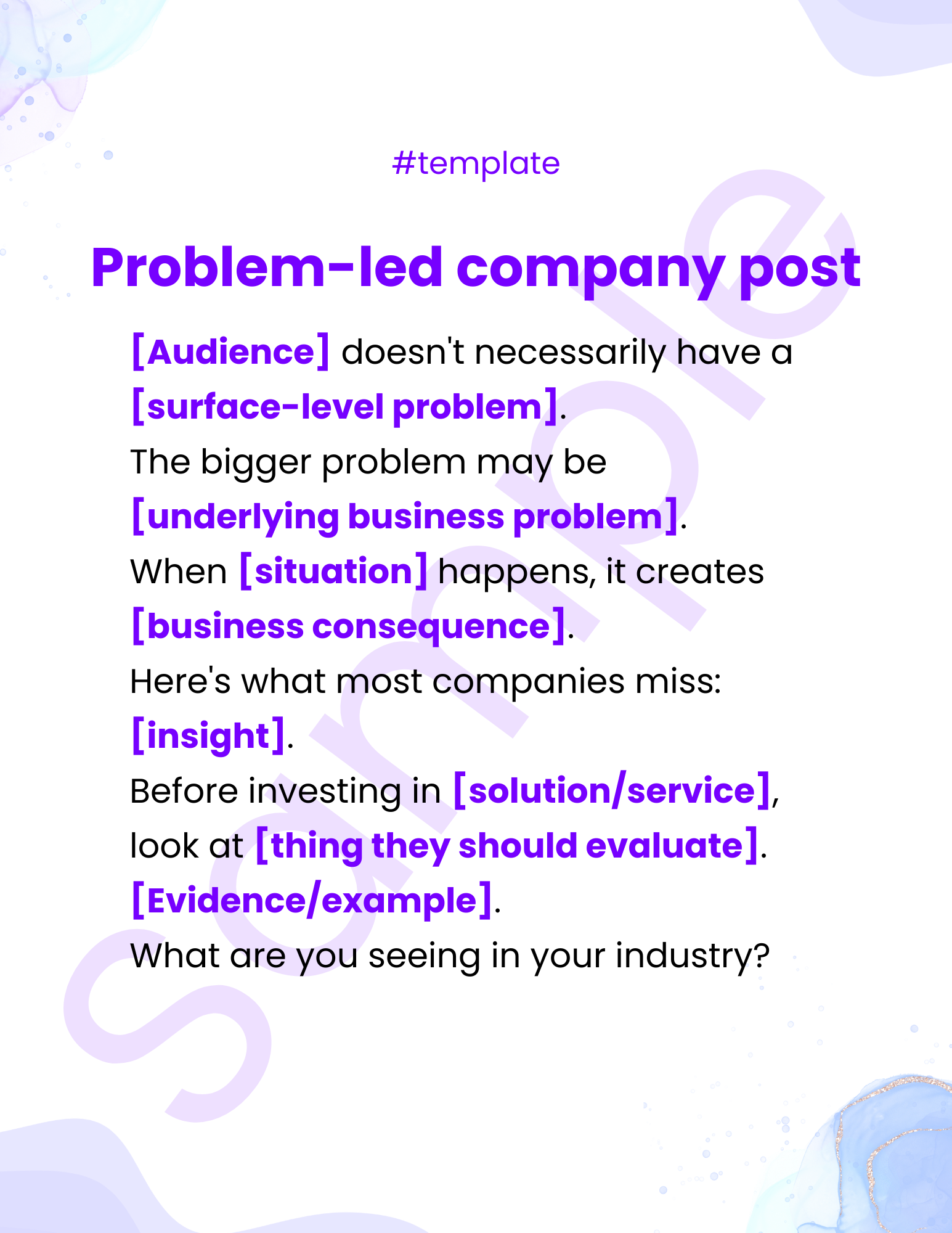
2. AI has made "personalization" easier : and less personal
This is where the current B2B marketing environment gets interesting.
We now have AI tools for:
prospect research
lead scoring
outreach
content
personalization
email sequences
LinkedIn messaging
intent detection
follow-ups

And yet many companies are sending essentially the same message to thousands of people.
The only things that change are:
Name + company + job title + recent post.
That's not necessarily personalization.
It's automation with additional context.
Consider this:
Hi John, I noticed that your healthcare organization is expanding. We help healthcare companies generate more qualified leads. Would you be open to a 15-minute conversation?
It looks personalized.
But the prospect may immediately think:
"Here comes another sales pitch."
Genuine personalization asks a different question:
"What does this particular buyer need to understand before they would feel comfortable talking to us?"
That's much more difficult.
And much more valuable.
Healthcare example
Instead of immediately pitching a healthcare marketing service to a hospital executive, create content around:
“Why healthcare organizations can increase digital visibility without increasing qualified patient inquiries.”
The executive may not be ready to buy.
But now you've demonstrated that you understand the problem.
Finance example
Instead of:
"We help fintech companies improve their marketing."
Create:
Why fintech brands often sound more innovative than they actually appear to enterprise buyers.
Now the content creates curiosity without demanding a sales conversation.
Reusable template
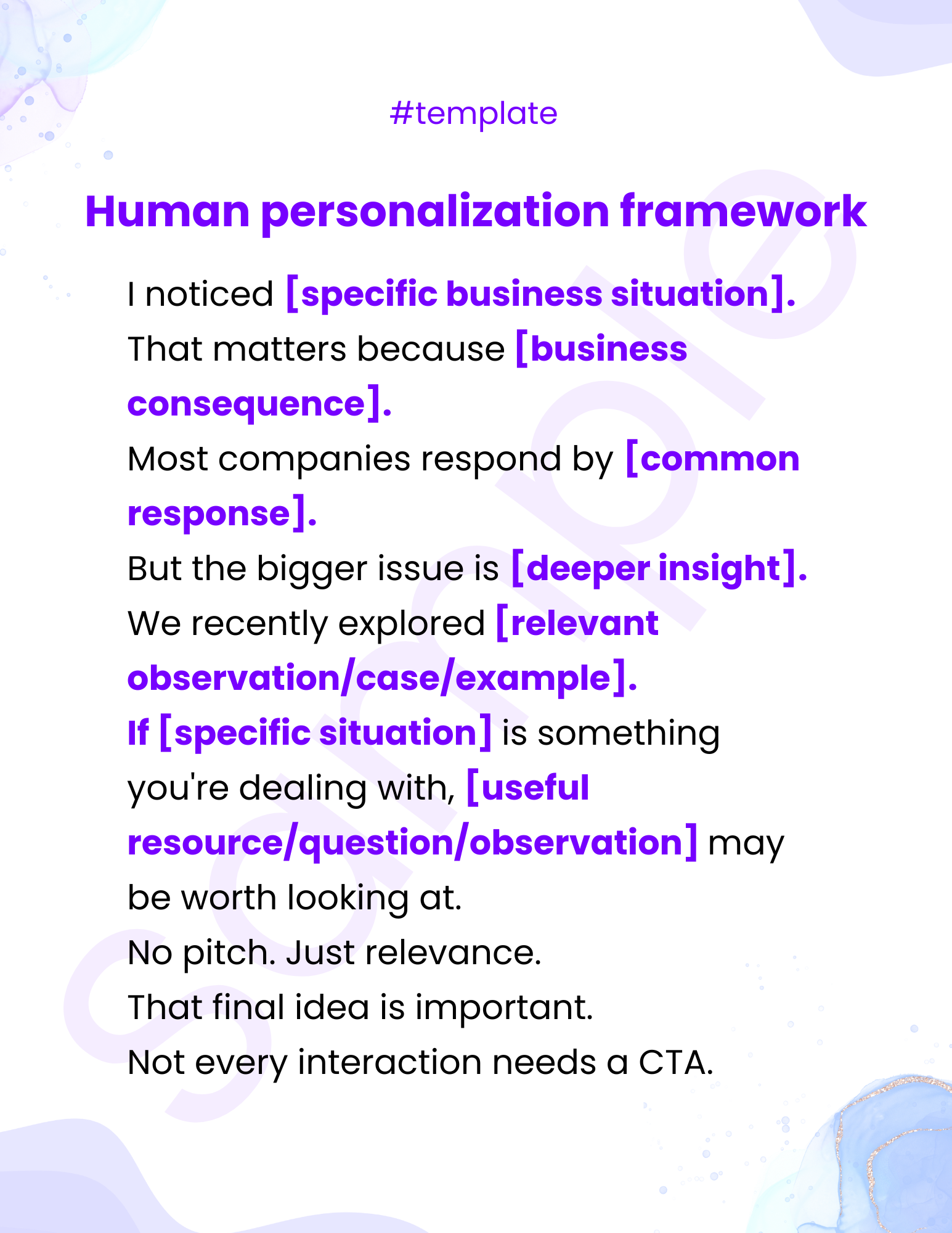
3. You're asking for the sale before earning the conversation
Imagine meeting someone at a conference.
You introduce yourself.
They tell you what their company does.
And immediately you say:
"Great. Can we schedule a 30-minute sales call?"
That's uncomfortable in person.
Why should it feel normal online?
Yet this is exactly what many company pages and automated outreach sequences do.

The problem is that engagement does not automatically mean buying intent.
Someone can:
like your post,
comment,
follow your page,
download something,
visit your website,
without being ready to speak to sales.
The solution: Create a progression of trust.
Think of your company page as a staircase:
Don't force people to jump from step one to step seven.
Healthcare example
A healthcare executive sees:
Post 1: Why healthcare brands struggle to differentiate.
Then:
Post 2: What weak healthcare positioning does to lead quality.
Then:
Post 3: A real example of a healthcare company repositioning its message.
Then:
Post 4: A practical positioning checklist.
Only now does:
"If you're facing something similar, let's talk."
feel natural.
Reusable template
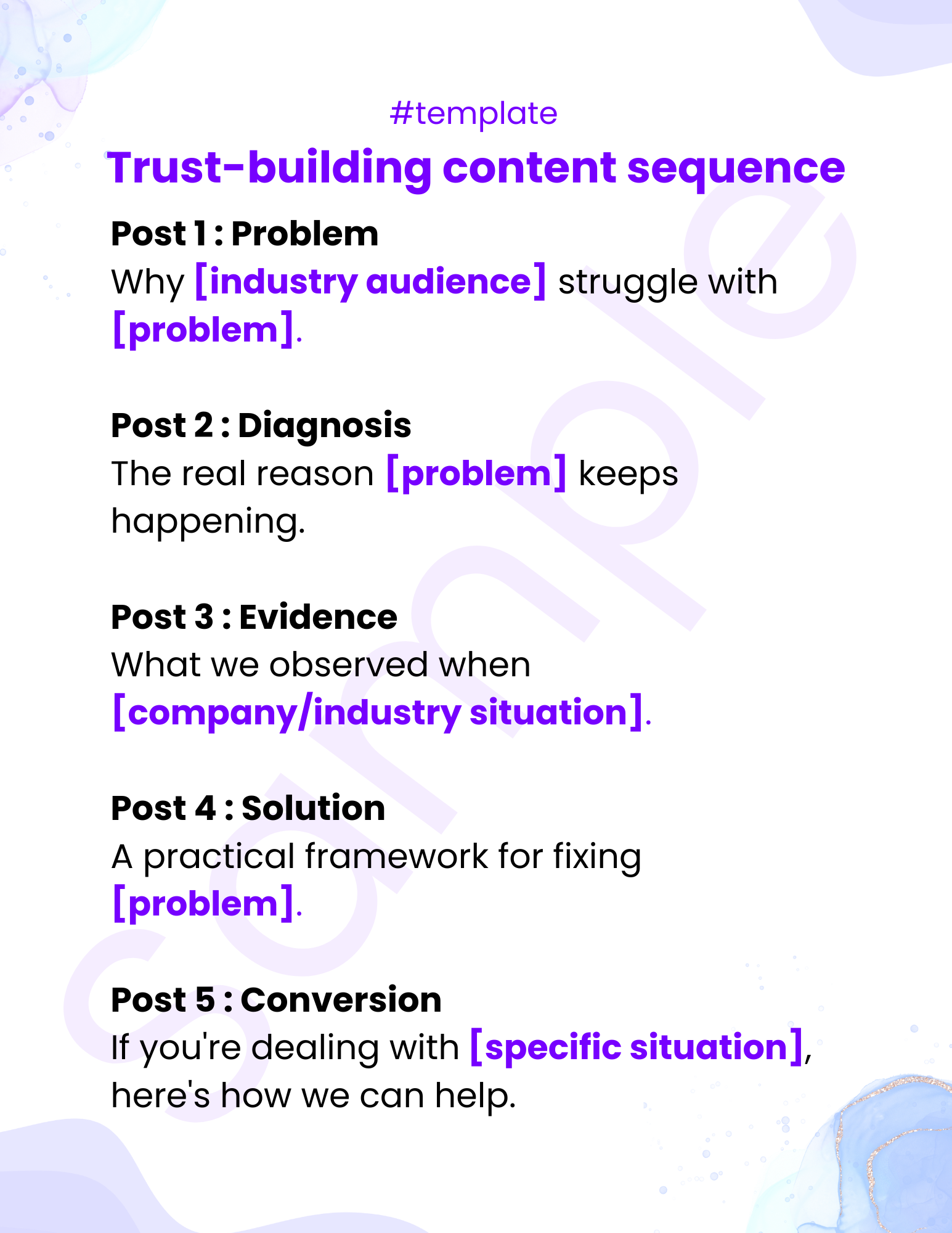
4. Your company page is talking to an industry, not a buyer
"Healthcare" isn't a buyer.
Neither is "finance."
Neither is "fintech."
Within healthcare, you might be speaking to:
hospital executives
specialty practices
healthcare SaaS companies
medical device companies
RCM companies
healthcare technology providers
private healthcare groups
Their problems aren't identical.
The same applies to finance:
banks
fintech companies
insurance providers
wealth management firms
lending businesses
payment companies
financial SaaS providers
A page trying to speak to everyone usually becomes relevant to no one.
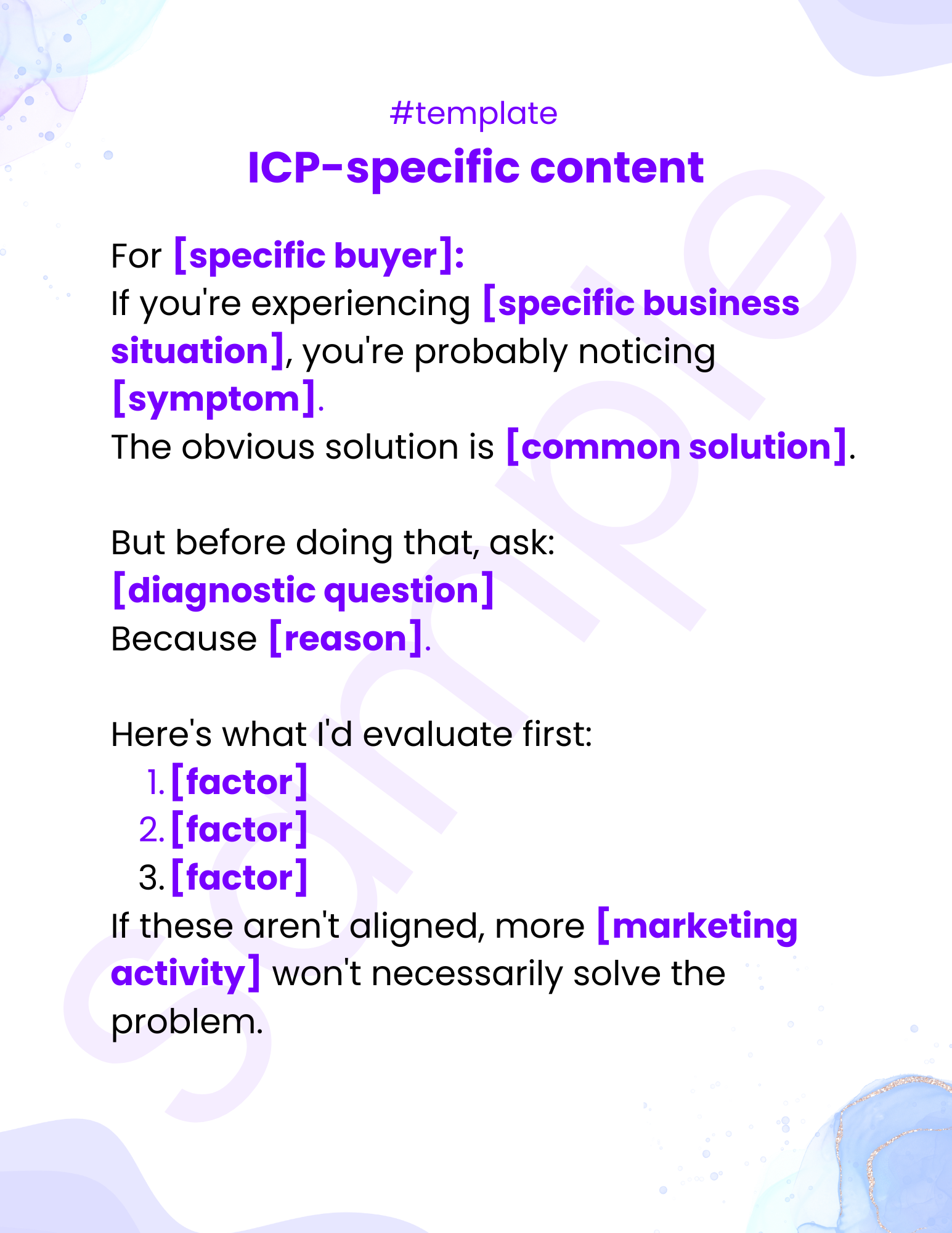
The solution: Build content around buying situations.
For example:
Healthcare
"Why a growing specialty practice isn't converting website traffic into qualified inquiries."

Healthcare SaaS
"Why healthcare SaaS companies struggle to explain their product to non-technical decision-makers."
Fintech
"Why fintech differentiation disappears when every competitor says 'simplifying financial services.'"
Financial services
"Why trust signals matter more than posting frequency when selling complex financial services."
Reusable template
5. Your content is generating engagement : but not buying intent
This is where many marketing reports become misleading.
A company posts: 50,000 impressions.
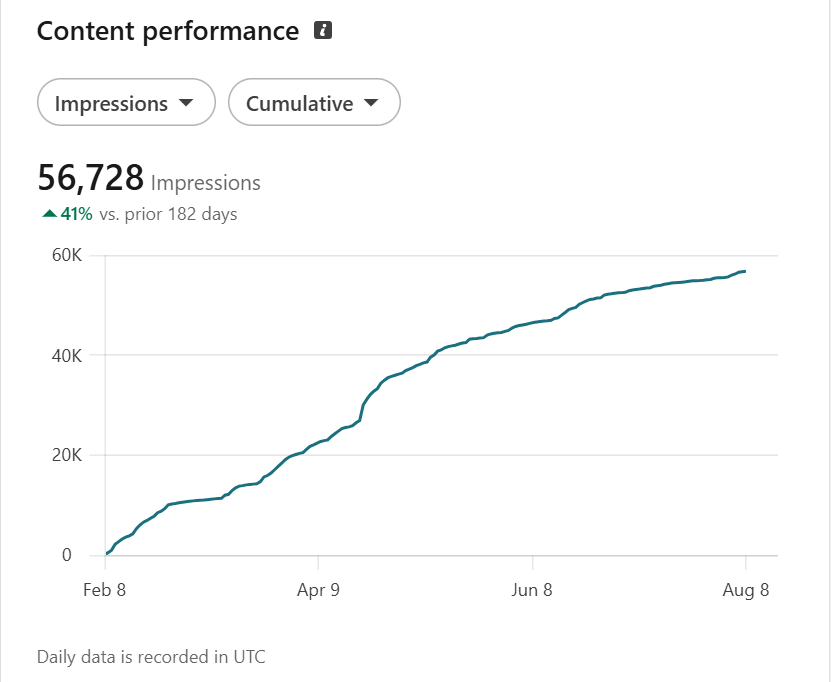
The marketing report celebrates.
But the sales team says:
"We didn't get a single qualified opportunity."
Both can be true.
Because reach isn't revenue.
A better question is:
Did the right people become more interested in the company?
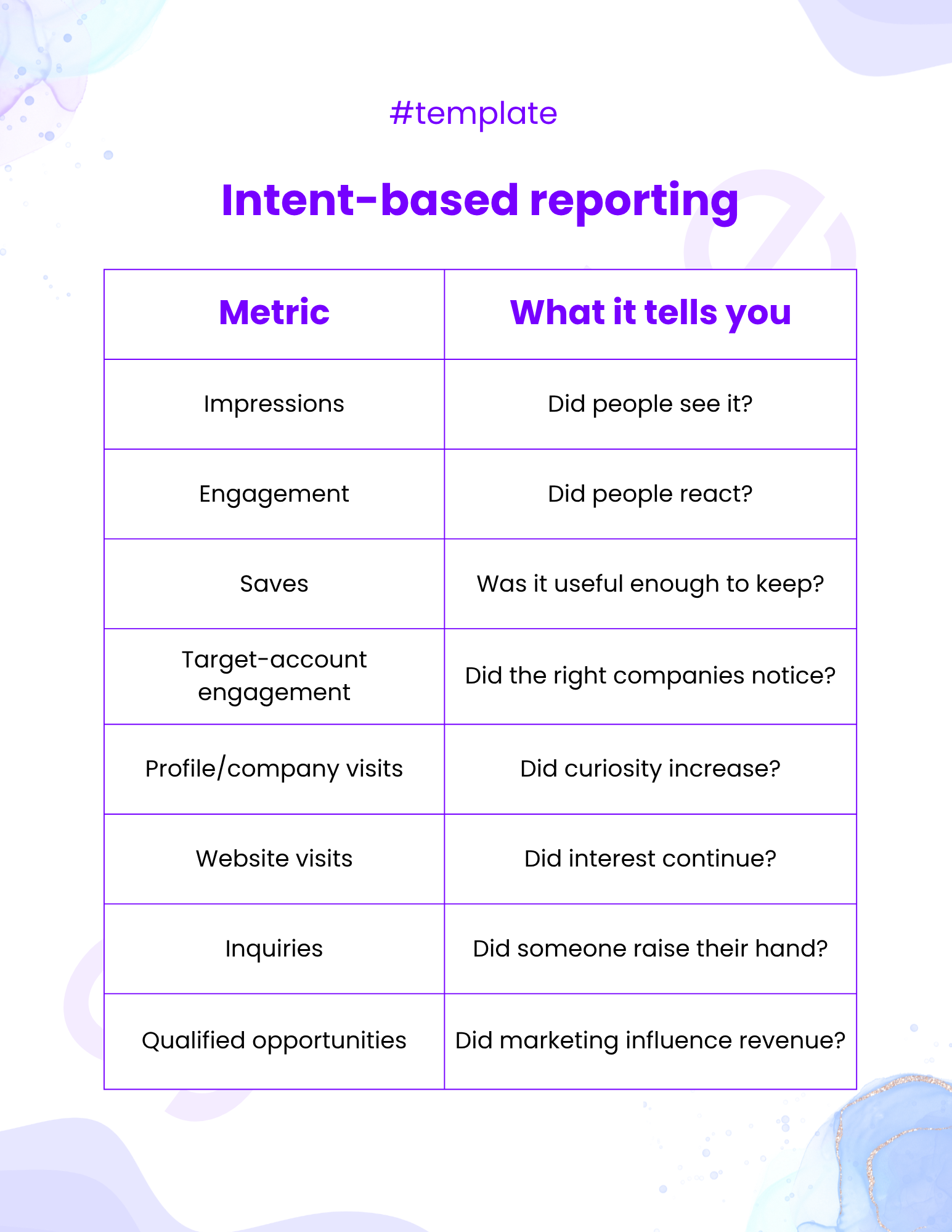
For a B2B healthcare or finance company, I'd pay closer attention to signals such as:
profile visits from target accounts
engagement from decision-makers
repeat visitors
relevant comments
direct inquiries
content saves
qualified website visits
branded searches
conversations initiated
target-account engagement
sales-qualified opportunities influenced by content
Reusable template
The important shift is:
Don't ask only how many people saw your content. Ask who became more interested because of it.
6. Your company page and your website are telling different stories
This is especially damaging for healthcare and financial services companies.
Imagine a LinkedIn page saying:
"We help healthcare organizations modernize their growth."
Then the website says:
"Welcome to ABC Digital Solutions. We provide comprehensive marketing solutions."
Then sales outreach says:
"We specialize in generating qualified leads."
Three different positions.
Three different promises.
One confused buyer.
The solution: Build one narrative across every touchpoint.
Your:
LinkedIn page → Website → Founder profile → Blog → Sales outreach → Case studies
should reinforce the same core idea.

Healthcare example
Positioning:
We help specialty healthcare organizations turn unclear market positioning into a clearer path to qualified demand.
Now your content can discuss:
healthcare positioning
patient acquisition
provider differentiation
digital credibility
demand generation
rebranding
Everything connects.
Finance example
We help financial services and fintech companies communicate complex value in a way that builds buyer confidence.
Now your content isn't random finance marketing advice.
It has a strategic center.
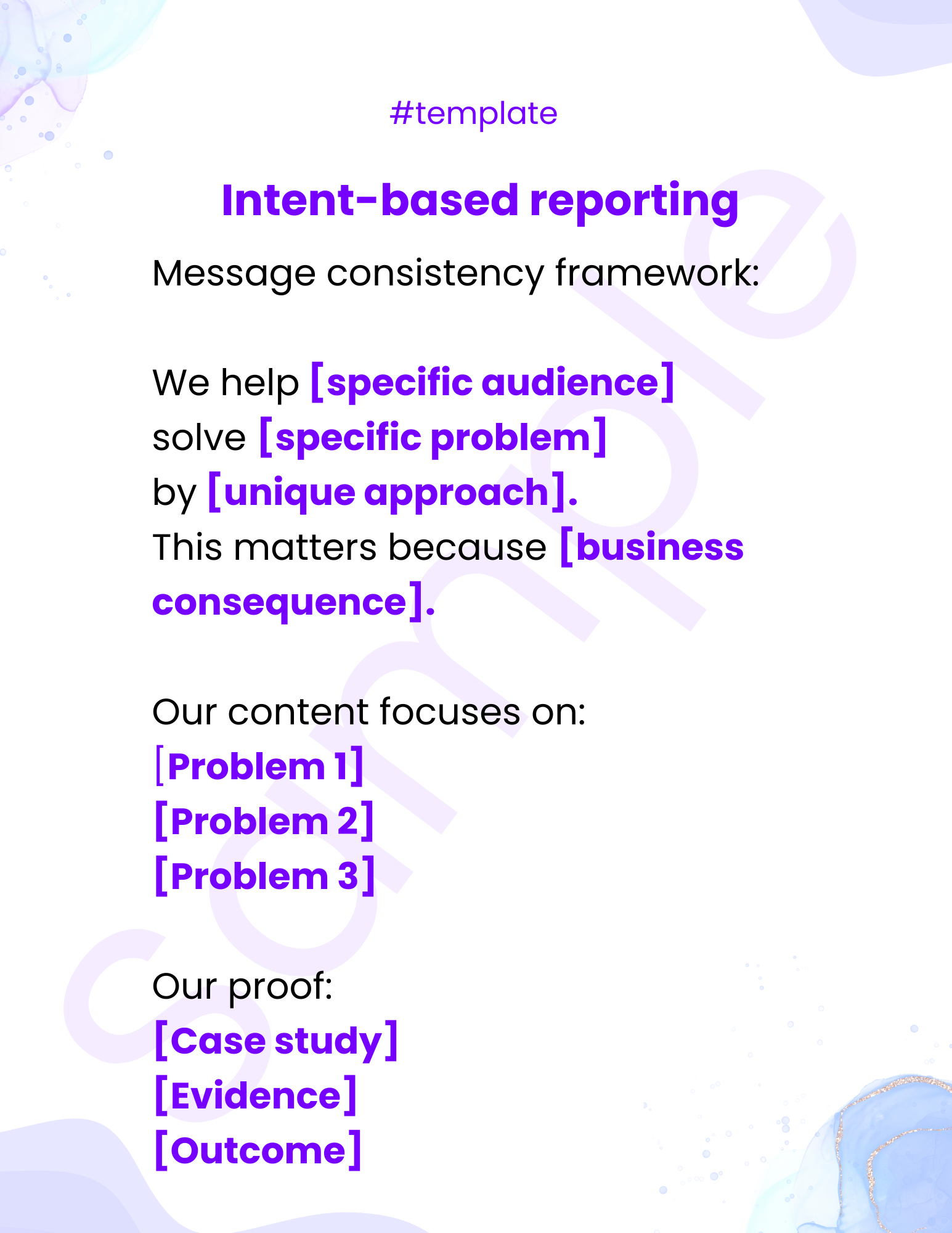
Reusable template
7. Sometimes your company page doesn't need more content.
It needs repositioning.
This is an uncomfortable possibility.
If your company has been publishing consistently for months and nothing is changing, the answer may not be:
"Let's post five times a week."
The problem could be your positioning.
Ask:
Does the company sound different from its competitors?
Can a buyer understand what you actually solve?
Does your content reflect the problems buyers are actively experiencing?
Does your website reinforce the same message?
Does your sales outreach sound like your content?
Would your target customer recognize themselves in your messaging?

If the answer is no, you may have a positioning problem disguised as a content problem.
And that's where rebranding may become relevant.
Healthcare example
Instead of:
"Full-service healthcare marketing solutions."
A stronger position might focus on a specific business problem:
Helping healthcare organizations turn fragmented digital visibility into a clearer demand-generation system.
Finance example
Instead of:
"Innovative marketing for financial services."
Consider:
Helping complex financial brands become easier for high-value buyers to understand and trust.
Reusable template
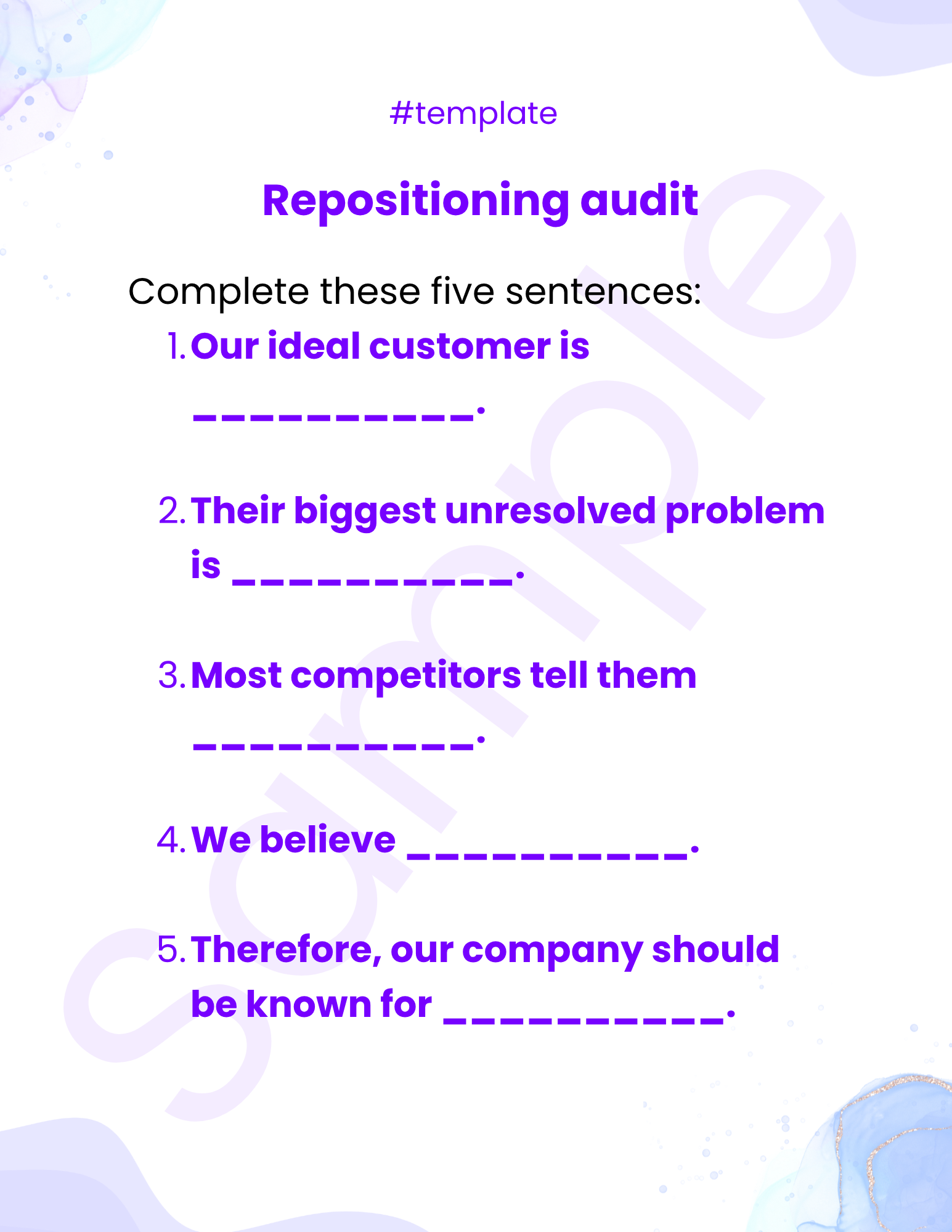
If these answers are unclear, creating more content won't fix the underlying problem.
8. Don't use the same strategy in every country
Your target markets include:
United States, United Kingdom, Australia, Malaysia, UAE, and Singapore.
The core positioning can remain consistent.
But the context should change.
A healthcare decision-maker in the US may respond to a different regulatory, operational, reimbursement, or competitive context than a healthcare decision-maker in the UK, Australia, Singapore, Malaysia, or UAE.
The same applies to financial services.
You don't need six completely different brands.
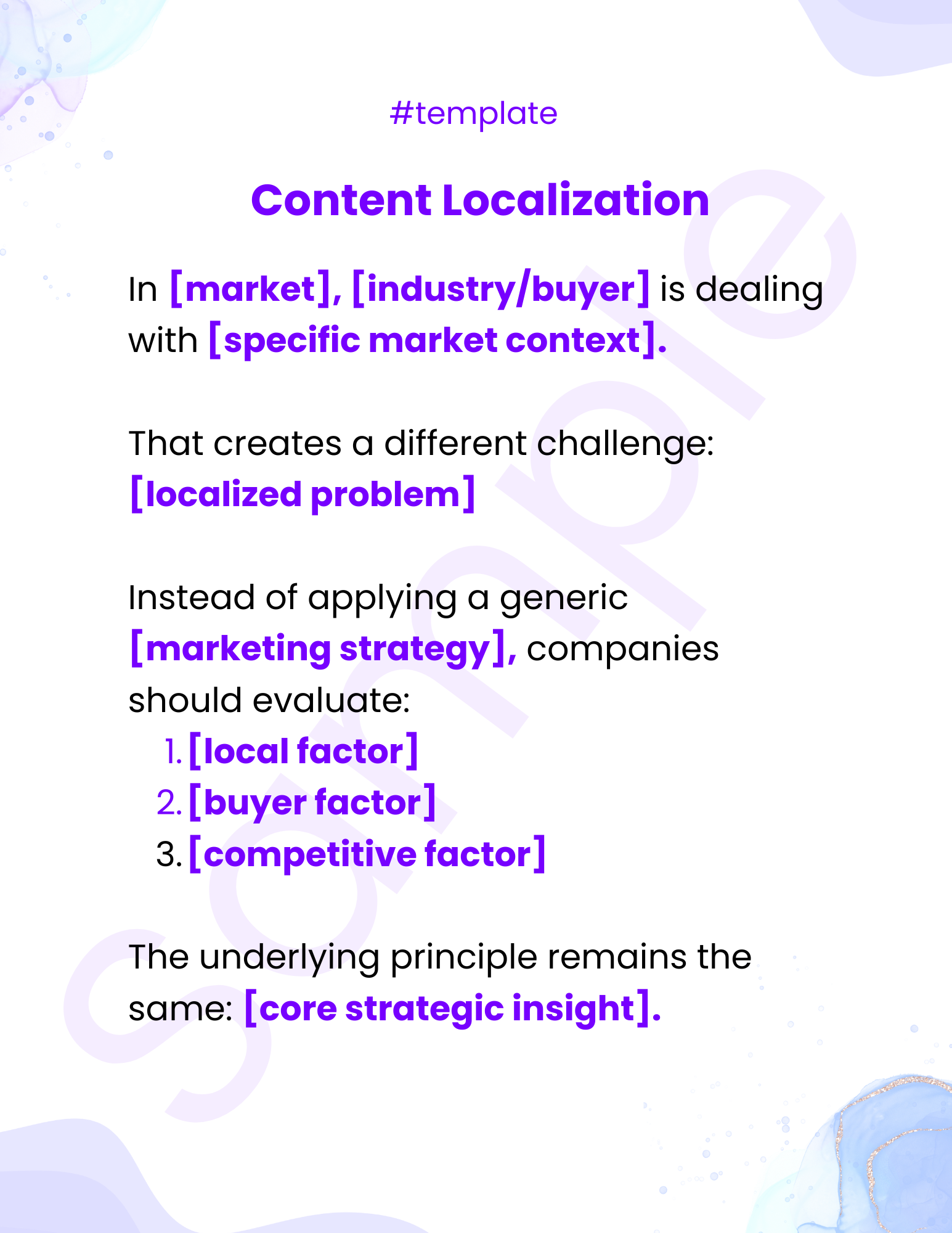
You need one strategic narrative with localized relevance.
Example
Instead of:
"Healthcare organizations need better digital marketing."
Create market-specific angles:
US
Why US healthcare providers can have strong digital visibility but still struggle to generate qualified patient demand.
UK
Why healthcare brands competing in a crowded UK market need clearer differentiation than another generic "patient-first" message.

Australia
Why Australian healthcare organizations should evaluate buyer intent:not just digital reach:when measuring marketing performance.
Singapore
Why trust and clarity matter when marketing complex healthcare and financial services in a highly competitive market.
UAE
Why rapid growth makes positioning more important: not less: for healthcare and financial brands entering the UAE market.
Malaysia
Why healthcare and financial brands need localized messaging instead of simply repurposing global campaigns.
The point isn't to manufacture six versions of the same article.
It's to show the buyer:
"You understand the market I'm operating in."
Reusable localization template
9. AI should help you understand buyers : not make buyers feel hunted
This might be the most important lesson.
AI is incredibly useful.
Use it to:
analyze customer research
identify recurring pain points
cluster buyer needs
discover content gaps
analyze conversations
personalize research
identify patterns
improve content
accelerate execution
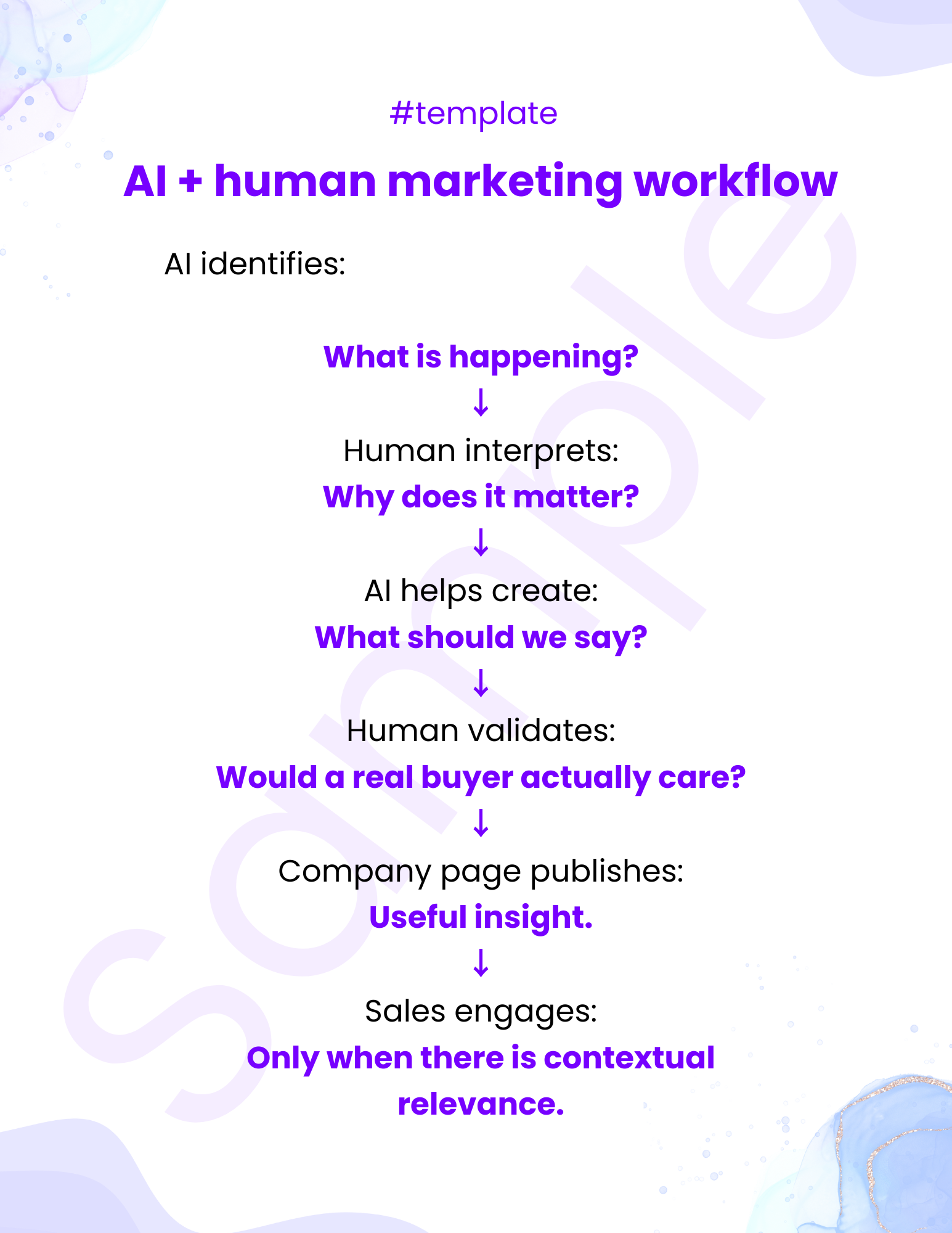
But don't use AI simply to increase the number of people you can pitch.
Because:
More automation + the wrong message = more irrelevant outreach.
The goal isn't:
How many people can we reach?

It's:
How many of the right people can we make feel understood?
Reusable template
10. Make your company page a place buyers can research you
Here's the mindset shift:
Your company page isn't just a publishing channel.
It's part of your buyer's research process.
A senior decision-maker may discover you today and contact you three months from now.
They may:
See your post.
Visit your company page.
Look at your website.
Read your case studies.
Search your founders.
Read several articles.
Compare you with competitors.
Return weeks later.
Finally start a conversation.
If your page only contains:
"We're excited to announce..."
"We're proud to share..."
"Contact us today..."
you've given the buyer very little to research.
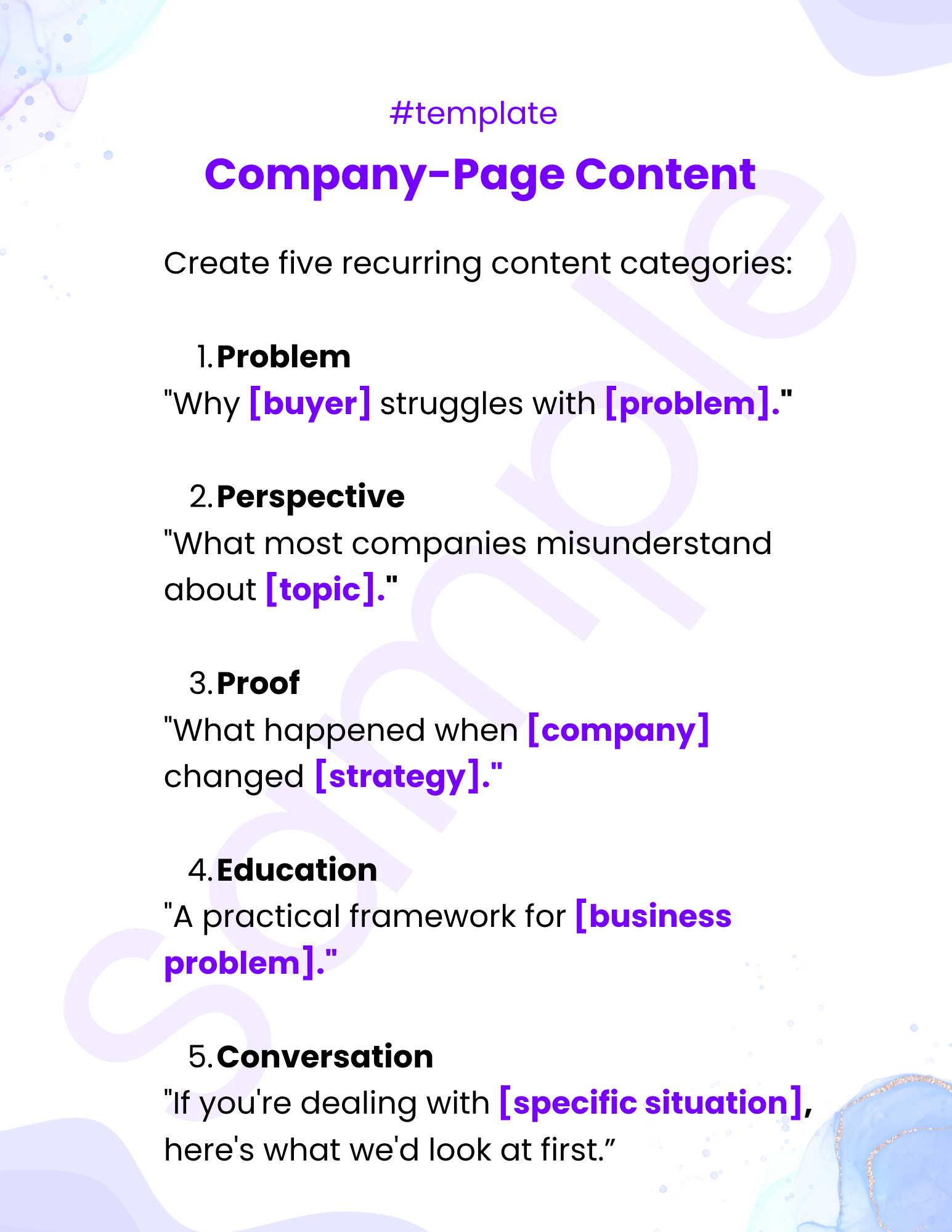
Build a company page that answers five questions
1. Do you understand my problem?
2. Do you understand my industry?
3. Do you have a point of view?
4. Can you prove your expertise?
5. Would I trust you with my business?
Reusable company-page content template
Healthcare example: From generic marketing to demand generation
Imagine a healthcare organization says:
"We need more leads."
The traditional response might be:
More posts + more ads + more outreach.
But let's diagnose the problem first.
Step 1: Identify the actual issue
Website traffic is increasing.
But qualified inquiries aren't.
Step 2: Investigate the message
The website says:
"Compassionate care. Advanced technology. Patient-centered services."
Every competitor says something similar.
Step 3: Identify the positioning problem
The audience can't clearly understand:
Why this organization?
Step 4: Change the content strategy
Instead of publishing generic healthcare content:
"5 Benefits of Choosing a Leading Healthcare Provider"
publish:
"Why Healthcare Brands With Strong Visibility Still Struggle to Generate Qualified Patient Demand."
Now you're addressing the actual business problem.
Step 5: Build the conversion path
Insight
→ Case study
→ Framework
→ Website resource
→ Relevant conversation
Not:
Post → "Book a call."
Finance example: From AI outreach to buyer confidence
Imagine a fintech company sends 1,000 AI-personalized messages to CFOs.
The messages say:
"I noticed your company is growing. We help businesses streamline financial operations. Would you be open to a quick call?"
The personalization may be technically correct.
But it doesn't answer:
Why should I trust you?
Instead, the company could build authority around a specific buyer problem:
Why CFOs hesitate to adopt another financial technology platform : even when the ROI looks obvious.
Then explain:
implementation risk
integration complexity
internal adoption
security concerns
switching costs
stakeholder approval
Now the company isn't simply selling software.
It's demonstrating that it understands the decision behind the purchase.
That's what makes a buyer more comfortable.
So, what should your company page actually do?
It should move people from:
"Who are you?"
to:
"You understand my problem."
Then:
"You have an interesting perspective."
Then:
"I want to learn more."
Then:
"Maybe we should talk."
That's lead generation.
Not:
Post → AI DM → Meeting request.
The Company Page Lead-Generation Framework
If you want a simple framework to evaluate your own company page, use this:
R.E.A.S.O.N.
R : Relevance
Are you talking about problems your ideal buyer actually cares about?
E : Evidence
Can you demonstrate that your thinking is grounded in real experience?
A : Authority
Does your content show a distinct point of view?
S : Safety
Does interacting with your brand feel low-pressure and trustworthy?
O : Opportunity
Are you helping the buyer recognize a problem worth solving?
N : Next step
Have you created a natural reason for them to continue the conversation?
If your page is failing to generate leads, score each area from 1–5.
The lowest score is probably more important than your posting frequency.
What this means for healthcare and finance brands
For high-trust industries, the goal of social media isn't always immediate conversion.
It is often to reduce uncertainty.
Healthcare buyers want to know:
"Do you understand the complexity of our industry?"
Financial buyers want to know:
"Can I trust you with something this important?"
Senior executives want to know:
"Do you understand the business problem I'm actually trying to solve?"
Your content should answer those questions before your sales team ever asks:
"Can we schedule a call?"
Frequently Asked Questions
Why is my LinkedIn company page not generating leads?
A LinkedIn company page may fail to generate leads because its content focuses on company announcements, generic industry advice, or promotional messages instead of addressing specific buyer problems. Other common issues include weak positioning, premature sales CTAs, low trust, and content that attracts engagement from people who are not potential buyers.
How do you generate leads from a company page?
Generate leads by creating content that addresses specific buyer problems, demonstrates expertise, provides evidence, builds trust, and gives prospects a natural next step. The objective should be to move buyers from awareness to consideration before asking them to contact sales.
Why does healthcare marketing fail to generate leads?
Healthcare marketing can fail when messaging is generic, the brand is difficult to differentiate, marketing activity is disconnected from buyer intent, or companies focus on traffic and engagement rather than qualified demand. Healthcare organizations also operate in a high-trust environment where credibility and clarity strongly influence buyer behavior.
How can healthcare companies improve lead generation?
Healthcare companies can improve lead generation by defining a specific ideal buyer, identifying the problems that influence their decisions, creating problem-led content, demonstrating industry expertise, strengthening positioning, using relevant proof, and creating a low-pressure path from education to conversation.
How can financial services companies generate more B2B leads?
Financial services companies can improve B2B lead generation by making complex offerings easier to understand, building trust through educational content and evidence, addressing buyer risk, creating industry-specific content, and aligning social media, website messaging, and sales outreach around the same positioning.
Is AI personalization enough to generate leads?
No. AI can improve research, segmentation, content creation, and outreach efficiency, but adding a prospect's name, company, job title, or recent activity does not automatically create meaningful personalization. Effective personalization requires understanding the buyer's context, problem, priorities, and stage of consideration.
Should every LinkedIn post have a CTA?
No. Some posts should educate, some should demonstrate expertise, some should build credibility, and some should create conversations. If every post asks the audience to book a call, the company can appear overly sales-driven and may reduce trust.
When should a company consider rebranding?
A company should consider rebranding when its positioning no longer reflects its market, customers cannot clearly understand its value, competitors sound indistinguishable, the company has evolved beyond its existing identity, or marketing activity consistently fails to communicate a meaningful difference. Rebranding should solve a business and positioning problem rather than simply create a new visual identity.
The Bottom Line
Your company page doesn't need to convince everyone to buy.
It needs to make the right people feel understood enough to want to know more.
Because the problem with modern B2B marketing isn't that we don't have enough tools.
We have too many.
We can identify prospects faster.
Personalize messages faster.
Create content faster.
Send follow-ups faster.
Scale outreach faster.
But speed isn't the same as relevance.
And personalization isn't simply putting someone's name into an AI-generated message.
The best marketing doesn't make a prospect feel like they've been identified as a lead.
It makes them feel like you've understood the problem they're dealing with.
That's when a sales conversation stops feeling like an interruption.
And starts feeling like the next logical step.