


Why sounding "good enough" is costing healthcare and fintech companies trust, attention, and revenue.
Walk through any healthcare or fintech company's website and you'll notice something interesting.
The messaging isn't terrible.
It's polished.
It's grammatically correct.
It uses industry terminology.
It talks about innovation, transformation, customer-centricity, AI, seamless experiences, and end-to-end solutions.
On paper, everything looks right.
Yet somehow, none of it feels memorable.
And that's exactly the problem.
The Age of Generic Marketing
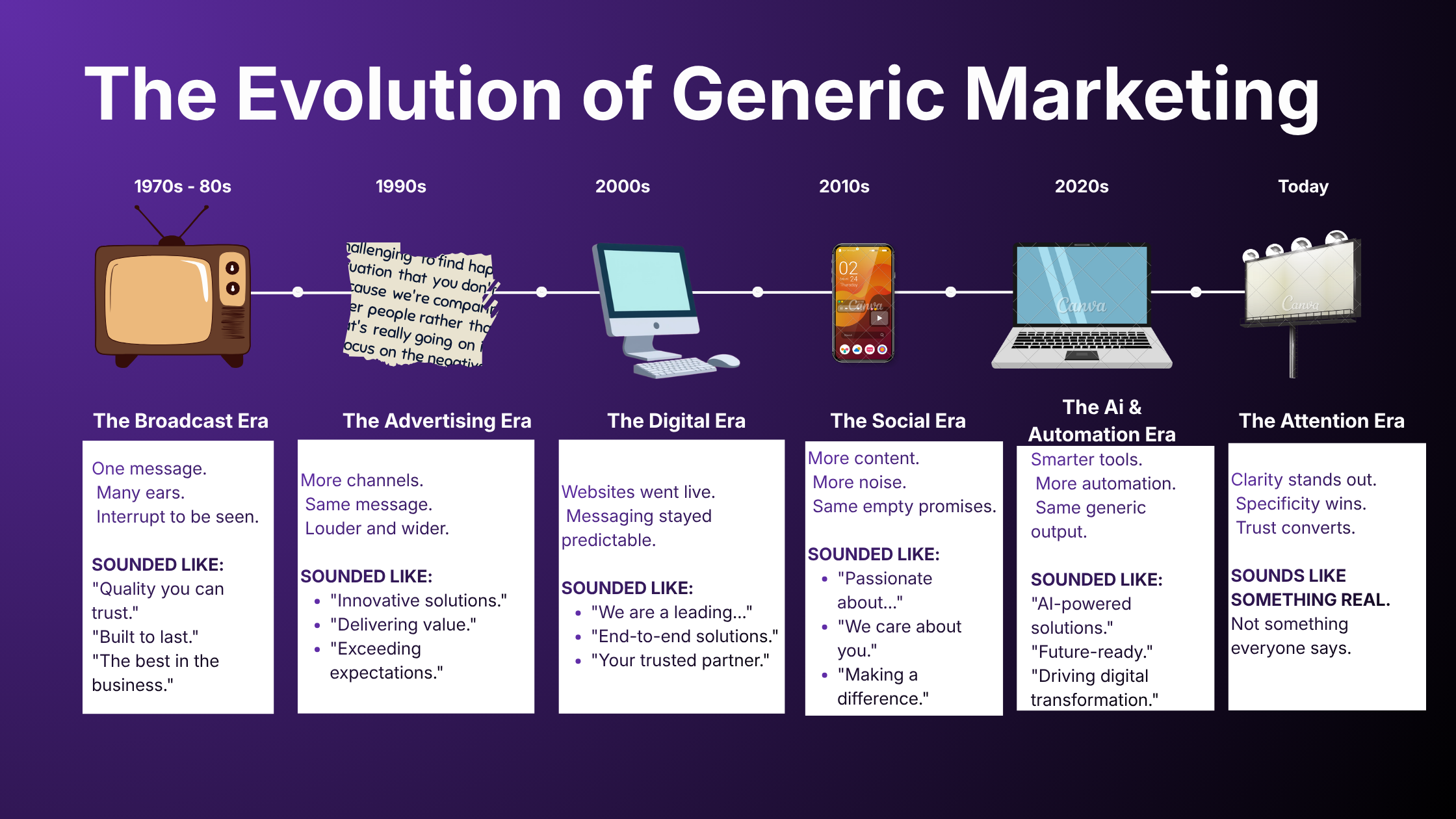
A decade ago, simply having professional messaging gave companies an advantage.
Today?
Everyone has access to AI.
Everyone has templates.
Everyone knows the "best practices."
As a result, brands have become professionally invisible.
Not because they're bad.
Because they sound exactly like everyone else.
When every company promises innovation, expertise, quality, and customer success, those words stop meaning anything.
Your audience isn't comparing you to one competitor anymore.
They're comparing you to every piece of content they consumed this week.
That's a much harder competition to win.
Healthcare Doesn't Need More Buzzwords
Healthcare is built on trust.
Patients trust providers.
Providers trust technology.
Hospitals trust partners.
Executives trust vendors with critical operations.
Trust isn't created by saying:
"We're revolutionising healthcare."
It's built by showing you understand the industry's complexity.
Great healthcare messaging answers questions before prospects ask them.
It reduces uncertainty.
It demonstrates expertise without shouting about expertise.
The brands winning attention today don't sound louder.
They sound clearer.
Fintech Has the Same Problem
Fintech companies often fall into another trap.
They speak like products instead of businesses solving financial problems.
Every website promises:
Secure infrastructure
Scalable solutions
AI-powered automation
Digital transformation
Better customer experiences
The issue isn't that these claims are false.
The issue is that they're expected.
When everyone says the same thing, buyers stop listening.
Differentiation doesn't happen because you have better adjectives.
It happens because you communicate your unique perspective.
Clear Beats Clever
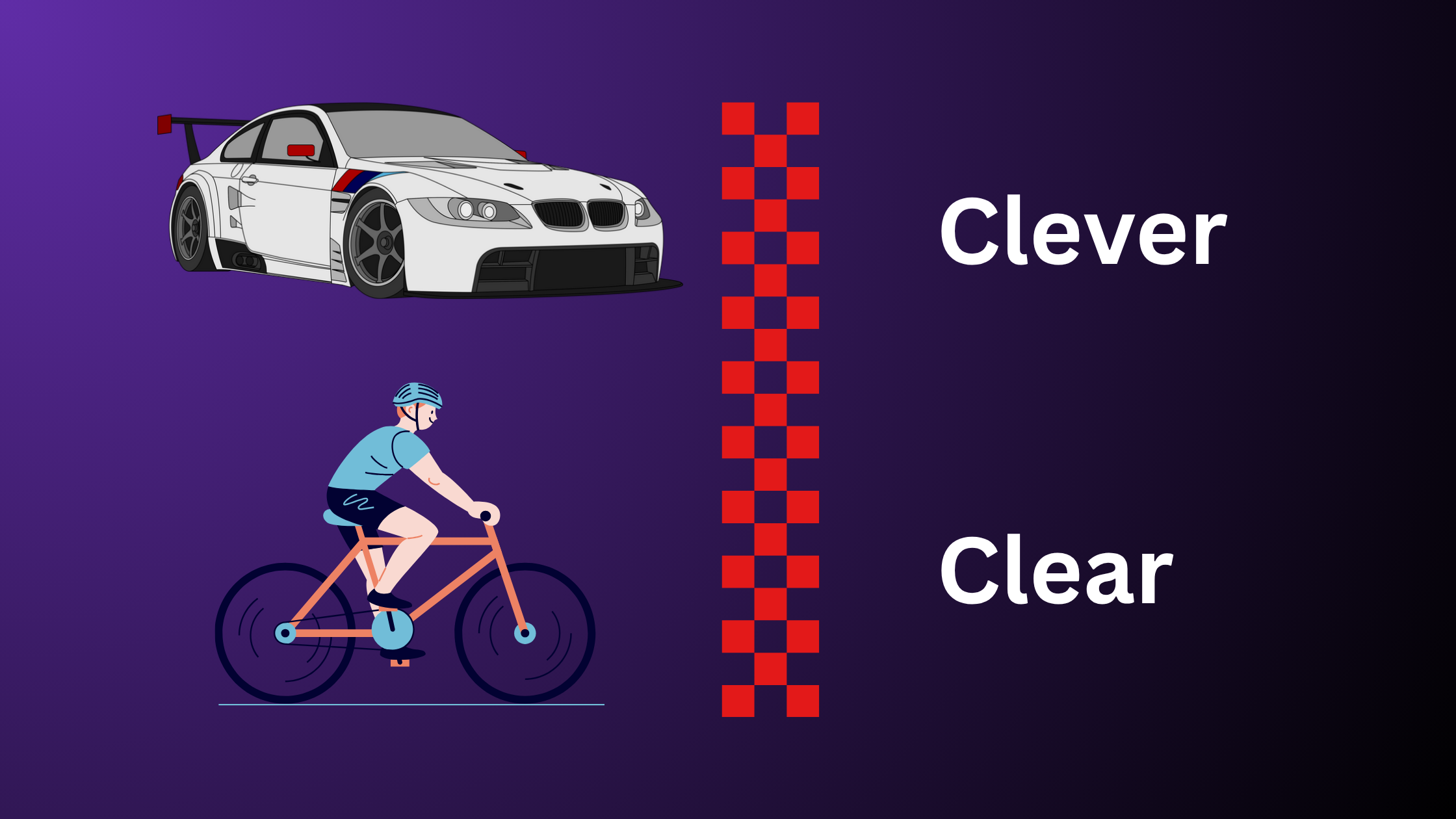
Many marketing teams spend weeks making headlines sound creative.
But prospects aren't looking for creativity.
They're looking for clarity.
Can you explain:
Why you exist?
Who you help?
Why you're different?
Why they should trust you?
Why now?
If someone can't answer those questions within thirty seconds of visiting your website, your messaging isn't working.
No matter how beautiful the design is.
The Real Cost of Generic Messaging
Most companies think generic messaging only affects marketing.
It doesn't.
It affects the entire business.
Generic messaging leads to:
Lower website conversions.
Longer sales cycles.
Higher acquisition costs.
More price objections.
Weaker brand recall.
Less inbound demand.
Lower executive visibility.
Sales teams end up explaining what marketing should have communicated.
That's expensive.
Attention Is Earned Through Specificity

Specific messaging creates confidence.
Instead of saying:
"We provide innovative solutions."
Say:
"We help specialty healthcare practices reduce claim denials through revenue cycle optimisation."
Instead of saying:
"We empower financial growth."
Say:
"We help fintech companies simplify compliance messaging so enterprise buyers trust them faster."
Specificity creates credibility.
Credibility creates trust.
Trust creates opportunities.
Trust Is Becoming the New SEO
Search engines are changing.
AI assistants are changing.
Buyer behaviour is changing.
People no longer search only for keywords.
They search for confidence.
They're asking:
Who actually understands this industry?
Which company has a point of view?
Who consistently publishes useful insights?
Which founder sounds credible?
The brands that consistently answer these questions become the brands people remember.
Not because they publish more.
Because they publish better.
Why Founder-Led Content Wins
People trust people before they trust companies.
Especially in healthcare.
Especially in fintech.
Your expertise shouldn't be hidden behind corporate language.
It should be visible.
Founders who share insights, lessons, opinions, and industry observations become the face of credibility.
That credibility eventually becomes brand equity.
Your content shouldn't sound like it came from a committee.
It should sound like it came from someone who genuinely understands the problem.
Your Messaging Isn't Supposed to Please Everyone
One of the biggest mistakes businesses make is trying to appeal to every audience.
The result?
Messaging that offends nobody.
And excites nobody.
Strong positioning naturally excludes the wrong audience.
That's a feature.
Not a flaw.
The clearer your message becomes, the easier it is for the right customers to recognise themselves in it.
The Question Every Brand Should Ask

Instead of asking:
"Does our messaging sound professional?"
Ask:
"Would someone remember this tomorrow?"
Because "fine" doesn't create conversations.
"Fine" doesn't create referrals.
"Fine" doesn't move deals.
The brands that grow aren't necessarily the ones with the biggest budgets.
They're the ones with the clearest message.
Final Thought
Most brands sound fine.
That's the problem.
Your buyers don't need another polished website filled with familiar promises.
They need confidence.
They need clarity.
They need a reason to believe you're different before they ever speak to your sales team.
Clear messaging doesn't just improve marketing.
It improves trust.
And in industries like healthcare and fintech, trust is often the difference between being shortlisted and being forgotten.
Key Takeaways
Generic messaging makes brands professionally invisible.
Clarity consistently outperforms clever copy.
Trust is built through specificity, not buzzwords.
Founder-led content creates credibility that AI can't replicate.
Strong messaging shortens sales cycles and increases buyer confidence.
The brands people remember aren't always the loudest—they're the clearest.